Showing posts with label interest-led learning. Show all posts

Monday, June 23, 2014

How to Have a Great Idea

One of my favorite podcasts, Innovation Hub, recently did a show on how people get really inspired ideas – the kind that change the course of their lives or careers. Host  Kara Miller (a favorite radio personality, she always asks such great questions) spoke with Frans Johanssen, author of The Medici Effect, and at the end of their conversation Kara asked listeners how they get ideas… And I thought, I can answer that!

My great ideas come from a combination of three things: creative constraint, percolation, and interaction with people, books, and media (like awesome podcasts!)

I'll take the last one first: thank goodness,  my life is full of great conversations, listening, and reading. Ben and I have always loved talking together (well, except for that one time when the kids were away and we had a huge fight about, for some reason, incentive pay for teachers), and Luke and Owen ask the most amazing questions, starting from when they were really small. Personal favorite, when Owen was two: "Mom, where was I before I was in your belly?" As a family, we often talk about history and current events. Mostly our conversations focus on academic-minded topics, like using technology to solve problems, or behavioral economics. About a year ago, I put the book Freakonomics into 13-year-old Luke's hands, and it changed his life – then, he took a Harvard Secondary School Program class in game theory, and changed mine right back. (I am currently kind of obsessed with game theory.)

In his great book, Talk Like TED, Carmine Gallo discusses the 18-minute maximum length of a TED talk, referring to it as a creative constraint – I guess in public speaking, an 18-minute presentation is  super short, which helps the speaker distill his or her presentation into the clearest, most crystallized form.
In my life, these last three years have been quite a restrictive form of creative constraint; with an arthritic-like tendon condition that affects every part of my body, I have sometimes felt like I am in a box that keeps getting smaller and smaller. To preserve my sanity, I have had to find ways of stimulating my brain without  overusing my limbs, enjoying participation in the world of ideas through reading, podcasts, and more recently with voice recognition software. Also, music has been a huge help –Spotify in particular is a favorite in our home, because of its serendipitous nature and fabulous playlists – and meditation has saved my bacon too, even though I am the world's worst meditator.

Owen, at four, 'meditating' with a book
But there's more to this than just preserving sanity; the biggest change has to do with the inner life I have been developing in these years of limited physical ability. Fascinatingly, it turns out that the end-runs that I must do around my physical limitations have led to an expansion of the abilities of my mind. In other words, I am not just coping with disability – the disability is leading to some higher-level thinking that I never would've had, without the disability. Creative constraint, baby!

Luke, at about 10, showing the patience needed for gardening
 Patience turns out to be another gift these last three years have given me. I have learned several different forms of patience, from waiting for pain to subside after a tough physical therapy session to spending months helping my muscles return from extreme atrophy. But my favorite form of patience is the kind that I've come to call percolation – it happens with, say, the idea that you write down at night, and when you wake up in the morning, it has morphed into something a little bit more interesting, or relevant, or viable. Sometimes this process takes days, or weeks even, and is always so rewarding.

Most of my ideas have to do with home, hearth, and family, which makes good sense given that I am a homeschooling mama. They are perhaps not life- or career-changing, but they make our household run a little more smoothly, help the boys figure something out in their learning, or bring  us all closer together.

But recently, I had an idea that is about a little bit more than just our family. It has to do with the changing face of childhood in our culture, with how we treat kids growing up in this place and time. As an educator, I learned that giving kids – even very young kids – real choices and real control over their lives helps them learn better. However, as a society we seem to be doing the opposite and causing a crisis with our young children. That link up there will bring you to a study, Crisis in the Kindergarten, by Joan Almon and Edward Miller and endorsed by the Alliance for Childhood, a group that is full of early childhood luminaries and geniuses such as Howard Gardner and Vivian Gussin Paley, two of my heroes. The study shows that, nationwide, the time that children spend making their own choices in a school day is mostly extremely limited, and sometimes nonexistent.

It seems that we are scheduling our children's days to be full of learning experiences, which sounds like a good thing. But between test prep, squeezed budgets that limit recess and other self-directed time in a day, and the kind of hectic, crazy lives that we all live with as we try to get everybody to their music or sports practices, kids are losing the ability to stretch their own imaginations, and implement their own ideas.

Anyway, the idea that came to me (through creative constraint, reading and conversation, and especially percolation) was this: when we take away a child's ability to  make choices and have some control, we fail to take them seriously.

Think about that for a minute. Think about how, when a decision that concerns you is made without your input, how disrespected that can make you feel. Think about how difficult that is to combat – even as an adult.

My idea for exploring this is called The Sincerity Project, and even though it seems like quite a small shift in perspective, it is leading to big changes in how I view teaching, learning, and parenting. I can't wait to share more about it!

Wednesday, January 19, 2011

Strike While The Iron Is Hot

As I write, Luke is dictating an idea for a game he's had to his Dad. He is so excited, he is pacing and breathless, speaking faster than his dad can write. It's been a long time since I've seen him like this.


Owen is excited too; now, it's his turn to tell Dad all about the dragons that are going to be in his game.


It's really this excitement that I wanted to blog about tonight. We have had kind of a blah day, cooped up in the house with freezing rain and grayness outside, Luke and I both with headaches and all three of us with an unsatisfy-able sweet tooth. It looked like we were going to have an evening with much of the same, and then – a eureka moment!

We got to talking about making our own games, even making a company that would sell our games, and it sparked something new in both children. I mean, they've been excited about things, but this was different. You could see the possibilities dawning on their faces, especially Luke.

At one point he was so emotional he could hardly speak; when he found his voice, he asked, "what if we fail?" I told him that I don't think of it as failing, and instead if we end up not reaching our goal, we would still have learned lots, and that what we learn would take us through future ventures. I told him, I try to think in terms of learning versus succeeding or failing. He had been so upset, I was frankly a little surprised when he perked right up and asked for a notebook, a pencil, and some time on the computer.

Now, he is asking for a different notebook that he can take up to bed with him to write more ideas; Owen just came in to kiss me good night and as he was leaving he asked, "Mom, how do you start a company?"

I told him I was just about to look into it.

Monday, September 20, 2010

The Month That Keeps On Giving

Since this hasn't been a year in which somebody close to us got married in September, we've had to find other ways to keep busy. And we have! So busy, in fact, that getting time to blog about it all has been hard. Here's a sampling of what us Stone Age Techies have been up to:

We visited Plimoth Plantation, practically all by our onesies because it's too early for field trips yet. And, other than getting attacked by the English Village's chickens as we attempted to eat lunch, we had a great time.


We were all fascinated with canoe-making...


And charcoal-making.

Both boys also loved the Mayflower II, docked in Plymouth Harbor.


They were totally nonplussed by Plymouth Rock, however.


"Mom, it's just... a rock." You can almost hear Luke's silent 'WTF?' ... if he knew what WTF? meant.

And then! Oh, we went on a camping trip to Cape Cod, with friends who know what there is to do on Cape Cod. What a trip!


This, and the following pics, are from Fort Hill on the Cape. The lack of houses and people astounded me, I've always thought of the Cape as a place of ice-cream shacks and little tourist cabins lined up, side by each. But no, there are entire acres pretty well undeveloped:


We were all fascinated with the view, but returned quickly to camera-hamming:


Then we went off to Skaket Beach, timed just right to hit low tide:


Notice that, to take this pic, I am standing way the heck off shore, facing the land. The rock has that orange buoy attached because, at high tide, it's totally submerged. I don't know why I think that is so cool, but I really do think it is.

Then, to top off the weekend, we had Flax Pond at Nickerson State Park all to ourselves! And Luke learned how to kayak:


He was so free out there on the water, wandering any old which way he wanted to.

Thanks, Carrie and family, for a great weekend... when we next come up for air, I will be sure to post some pics about our adventures!

Monday, September 13, 2010

The Intersection of Math and Art

School, such as it is for us, kind of officially started last week, with an art class at the library and an amazing math/science class offered by a friend.

Historically, my boys have been totally uninterested in art classes, at least those not about making light sabers out of ziti and aluminum foil. But after Luke was on the winning Battle of the Books team and the second place finisher, that same day, in our library's Harry Potter Trivia Tournament last month, he would follow the librarian anywhere, even into art classes.

Last week's was all about lines, and truthfully I did not think either Luke or Owen got much out of it - until math class, in which the kids made geoboards.

I had my doubts about the geoboards, too. Luke was freaked out about hammering, and worked hard to overcome his fear of getting hurt, so I helped him lots more than I would have thought a ten-year-old might need. Owen helped pound about five nails in before running off to play with the other six-year-olds; when we left, with plenty of colorful elastics and two finished geoboards mostly made by yours truly, I concluded that they would not even be looked at before the next math class.

So, imagine my surprise when, before breakfast the next morning, Luke asked, "Hey Mom, what do you think of this:"


I was stunned. When had he made this creation? "Oh, just now." On the other side of the table, Owen was working too:


My awe was complete when the boys started talking about how the lines in their geoboard designs connected with the lines they learned about in art class. They drew comparisons between the two classes that I would never have thought of, just casually, over breakfast.

Reminding me (again) that learning happens when it happens, and even when you think it isn't happening.

Thursday, May 27, 2010

Rube Goldberg, You Rock My World

I hadn't heard of Rube Goldberg before last week, when the boys started a class at our library called Simple Machines. But evidently, Mr. Goldberg is the guy who first combined pulleys, levers, fulcrums, wheels, ramps and balls into those funny machines that do something - smash an egg, drop ping-pong balls on your head, that kind of thing.

Part of our homework this week was to look up Rube Goldberg machines on YouTube, so I thought I'd share some of our favorites.

Here is one called 'Creme that Egg:'


OK Go's newest, This Too Shall Pass:


This one knocks down a whole bunch of bowling pins, in somebody's workplace:


They are fun, and silly, and require a lot more thought than, well, you might think. When Luke and Owen have made their Rube Goldberg machines, I'll post about them.

Monday, April 26, 2010

The Evolution of Writing

Owen is writing, and it is soooo cute.

But it's more than just cute. There is also something profound in these first clumsy attempts at written communication. My heart speeds up when I watch him shape letters, I marvel over what he perceives as so important that it must be written down. Here, other than his name, is the first document Owen's ever written himself:


It is about dwarfs, and what they do, and what they require to do what they do. Because someday, when he's old enough, Owen plans to play Dungeons and Dragons as a dwarf, and he's going to need the information on this sheet.
If you study the letters closely, you will see that he traced quite a few of them from dots that I put on the paper. Also, the words, where you can make them out, are spelled correctly; this is because he asked me how to spell the words and I told him.
But check out this next sample, the name of a store he and Luke are starting up for Poke (like Pokemon, pronounce Po-Kay) York:


It's called The Brothers Pom Pom Store, and they're planning on making pom-poms to sell, for Monopoly money, in Poke York for the Pokemon who live there. (Want to see Poke York? Click here.) You'll notice that 'Brothers' is spelled unconventionally, as is 'store.' Also, the letters are totally of his formation, not tracings of my letters.
When Luke saw this sign, I knew that he might question the mistakes. So I asked him to help Owen learn to write in the way that I wished he had learned to write: by trying to figure out which letters make which sounds to him, even if it doesn't make sense to the rest of us. Luke happily agreed, and I think he is enjoying being a teacher, even in a subject he's not all that confident in himself. Or, maybe it's because of his own lack of confidence.

In this latest sample, you can really see the evolution of Owen's writing - from me telling him what and how to write, to him sounding things out and writing them himself:


The drawing is mostly mine, but the letters that spell 'Pikachu' are all Owen's. They are, in order: P, K, E, D, E. And he sounded out the sounds in the word 'Pikachu' to get to those letters. So although it's barely legible, it is the one with the most personal meaning to him.

Being there at the very beginning of real attempts at written communication, especially when you can see how meaningful it is for the new writer, is one of the biggest joys of homeschooling so far. I can't wait to see what he writes next!

Thursday, February 11, 2010

Pre-Literacy

Owen, at five, wants to read so badly. He's fascinated with letters - their formation, which ones make which sounds - but the poor kid can't make sense of them yet, try as he might.


We play rhyming games, read great books (two current favorites: Henry and the Buccaneer Bunnies and the equally hilarious Way Out West with a Baby), and play games from another superb book, Games for Reading by Peggy Kaye.


But sometimes, you just want to be entertained while learning to read, and that is when we turn to YouTube. Here are some of Owen's - and Luke's, and my - absolute favorite reading/silly skits, from PBS's Between the Lions; this first one is the best:


By the end of that video, I am wiping tears of laughter off my face. Every time.


Next up, the Monkey Pop-Up Theater:


Now, the Amazing Adventures of Cliff Hanger:


And finally, Gawain's Word:


This skit is based off of Wayne's World, the movie with Mike Myers and Dana Carvey, which (due to my overly silly sense of humor) makes it all the more endearing to me. We have even been known to 'do' Gawain's Word in our pool in summer!


So, maybe these skits help Owen take in the principles behind decoding text. I can tell you, watching them with him on my lap at the computer, seeing his expression as each new goofy thing happens on-screen, breathing in his little-boy smell, laughing along with him - that is what I mostly like them for.

Monday, January 18, 2010

What is a Real Education?

Whoa. I've just read an article in The Atlantic Monthly, and let me tell you, it is a doozy. Entitled Cultivating Failure, the article disses California teachers and administrators who espouse gardening in school in addition to readin', ritin', and 'rithmetic.


It's a rant designed, it seems, to bring progressive educators, anyone who disagrees with author Caitlin Flanagan's near-Puritanical viewpoint about the 3 R's and, one imagines, garden-lovers, to spluttering rage. I must say, it worked on me. If you have a few minutes and feel like you haven't done enough spluttering today, go read it - and then come back, and let me know what you have to say. Go on, I'll wait for you.


So, what'd you think? Were you able to get past the deliberately inflammatory language, like the part where the author calls those who eat at Alice Waters' Chez Panisse restaurant "ACORN-loving, public-option-supporting [men] or [women] of the people"? Or, where she compares time spent by children gardening in school to sharecropping in the Jim Crow south?


The reader certainly gets a sense of what Flanagan feels kids should be doing in school instead of gardening: they should spend their entire schooling - 12,960 hours over twelve years of school, by my count - bent over their books, learning math and reading. Anything else, she seems to believe, is positively criminal, judging by her references to 'precious school hours' that should be spent, for example, 'writing paragraphs on The Crucible.'


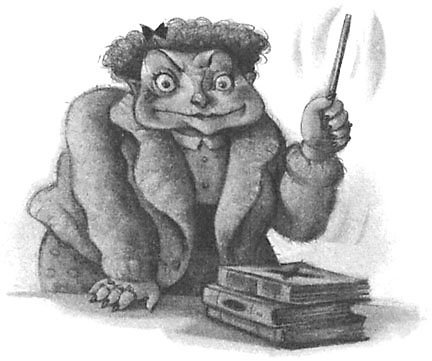
But here is my question: isn't the kind of school that Flanagan wants a prison in itself? Isn't it a great way to turn children off to the excitement of learning? I think my head might explode if I spent six hours a day in instructional time, and I'm an adult without the energy level of a typical five-year-old! The author is very Professor Umbridge-y in her viewpoint about school, even as she claims to know how to teach children best.


Repeatedly, the value of a good education is reduced in this article to a score on a test. The question 'why learn?' is answered, both overtly and subtly, with 'to get into college' or 'to score well.' There is absolutely no discussion of creativity, curiosity, the thrill of figuring something out.


I think that this is because the gist of the article is that gardening in school is especially bad for - and a tremendous insult to - poor, minority students whose parents or grandparents picked (or even still pick) food in orchards owned by others. And I'm not saying that the situation for poor minority families in California is a good one - but, once they pass the test and get that all-important piece of paper that says they passed the test, what do the sons and daughters do then? Start working at some crummy job, exchanging mindless button-pushing for tomato-picking?


Maybe that is what they do; while I've always been lucky enough to have food on the table, I've worked some crummy jobs in my time. But when I wasn't cleaning toilets or laundering the skivvies of total strangers, I was still using my brain, reading because I wanted to, or playing board games because I couldn't afford a tv, or going for a walk or even... wait for it... gardening.


Because my curiosity and love of learning was NOT squelched by endless drilling in school. I went on field trips, performed science experiments, had the extreme luxury, by today's standards, of two recesses per day until sixth grade and gym twice a week, and spent plenty of time just playing with classmates. I learned that learning is about more than the times tables and how to tell a subject from a predicate.


I kept thinking about The Alliance for Childhood while I read Flanagan's article about how bad gardening is for children, and how offensive we should all find gardening in school especially if our forbears relied on manual labor (as mine did) for a living.


The Alliance for Childhood is a group of educators including some of my heroes in the field, like Dr. David Elkind, child development specialist and author of The Hurried Child and Miseducation: Preschoolers at Risk, Sue Bredekamp, who co-wrote Developmentally Appropriate Practice, a book I reference even in homeschooling, and Alfie Kohn, who writes so persuasively against standardized testing. Two of them, Joan Almon and Edward Miller, have written a mind-blowing paper,Crisis in the Kindergarten: Why Children Need to Play in School, in which they review several studies about how much time young children spend in teacher-directed activities (like math and reading) versus child-directed ones (like recess and imaginative play). Any guesses about how much time kids spend in each? Here's a hint: mostly teacher-directed and nearly none, or actually none, child-directed.


Miller and Almon also discuss the ramifications, for children and our entire society, of the overwhelmingly teacher-directed world school has become for Kindergarteners, and it's not good:


As one kindergarten teacher put it, “If I give the children time to play, they don’t know what to do. They have no ideas of their own.” This is a tragedy, both for the children themselves and for our nation and world. No human being can achieve his full potential if his creativity is stunted in childhood. And no nation can thrive in the 21st century without a highly creative and innovative workforce. Nor will democracy survive without citizens who can form their own independent thoughts and act on them. (Crisis in the Kindergarten, pg. 8)


But, what is the power of a child's own ideas compared with a great score on a test? I guess that is the real question.


Friday, January 15, 2010

Learning Extensions, Analog and Digital...

... or a bit of both:


Owen, and Luke for that matter, is fascinated with The Lord of the Rings trilogy, and we only added fuel to that fire by giving Ben a LOTR game for Playstation. They spent most of the week after Christmas, and the week after that, watching their Dad battle cave trolls, orcs, and Uruk-Hai (which Owen refuses to believe are orcs, he thinks they are a whole different, super-bad race). So the pic up there is Owen, dressed as Legolas the elf, with straws for arrows and a wonderful polished stick (one of the best, most-used gifts he's ever gotten, incidentally) as his bow.


He loves to dress as a character and act out a part. I always know when he has taken something in, because he'll go around spouting lines perfectly from story, poetry... or video games. If that's not an extension to learning, I don't know what is.


Luke has re-discovered Dance Mat Typing, the funnest way to learn to type that I have ever seen. I'm serious, you have not lived until you've heard the cute moose host in the sunglasses tell you about the 'home row keys.' It's free, and as you go through the program, you get a certificate when you pass each level. Sure beats the grumpy keyboarding teacher that I had in high school!


Although I haven't really talked about it here yet, Luke had a very techie Christmas, finally fulfilling his life's dream when Santa brought him a Nintendo DS. He also got a great game, Brain Age, which turns out to be a learning extension, too. In fact, it is downright educational, and Luke plays it every day to exercise his brain.


Finally, and most analog of all, Lego fever has come to our home. Until this week, Luke directed others as to what to make with Legos for him to play with. He's always functioned around blocks in a purely supervisory capacity - but then, we got invited to join a Lego club and, coincidentally in the same week, he was given a Lego club magazine with directions for how to build underwater creatures. Suddenly, he's building, spending hours creating old-fashioned telephones, dolphins, little space speeders... It's a good thing Owen has loved Lego for a while, because we actually have a fair amount of it around.


And, are they really so analog? There was one last spark to Luke's Lego fire this week: Lego Digital Designer, free, downloadable software for designing your own creations, or checking out others'. And the coolest thing is, you can design something digitally and then buy the Legos to make it in analog!


Block-building could be one of the most intellectually creative activities, I am so glad Luke has finally caught on. Talk about a learning extension!

Thursday, January 7, 2010

I am the Queen of Felting

I love the idea that homeschooling isn't just for the kids, it's for the parents too; while the young ones learn about whatever they want to, so can we. It's in this spirit that I took up knitting over the holidays and, while I have been knitting for only a month or so, I've certainly dived right in.


I finished this sweater last week, and I love it. I called it my experimental sweater, a good name because it doesn't really fit me all that well - it's too long in the arms and too broad in the shoulders, while at the same time it's not quite long enough in the body and so I end up looking like a gorilla wearing a sweater that's too short. It is not pretty, which is too bad, because it is such a lovely sweater.


As I was finishing it up, I realized that this knitting stuff is habit-forming, and that I felt really strange without something somewhere on needles. So I decided to make a felted tote from the best knitting book ever (the one we've taken to calling 'Stitch n' Complain' in our house because the real name contains a swear.) I figure I'll use the tote to keep my knitting in, so that I can take it with me wherever I want, instead of using the far-less-transportable basket that houses current projects now.


But the felting presented a problem: to take wool and turn it to felt requires very hot water and agitation. Most people toss their projects into the washing machine to accomplish the task. But we have a front-loader - great for saving water, and cutting down on drying time and wear on clothes - but sucky for felting because you can't stop the washer to see when it's time to stop felting, and also it hardly agitates at all (hence the less wear on clothes). I would have to find another way.


First I tried boiling the heck out of a gauge swatch, but after ten solid minutes of rapid boiling, all I had was a house that smelled like a herd of sheep lived here. So then I found a blog post on the web in which the blogger stuck her project in a bucket on a towel in her bathtub and used a (clean, new) plunger to agitate in very hot water. I must admit I was skeptical, especially after the boiled-on-the-stove experience, but I tossed the swatch into the bucket along with a bit of dish soap and a pair of Owen's jeans, and in about three minutes, voila! I had felt.


Now, it was time to take my finished bag and try it with that.


There it is. I was afraid to stick it in the bucket, because I worked so hard on it.


And here we are mid-agitation. I am getting scared at this point, after five or so minutes of hard labor, that maybe it won't take.


But after another few minutes, less than five, it worked! It felt all felty. So I rolled it up in a towel to get out some of the moisture, and then laid it flat to dry.


And THAT is why I feel that I can call myself the Queen of Felting. Best of all, I ended up with about two combined skeins of yarn in three different colors, so I can make other stuff to felt! Socks, mittens, perhaps another purse... habit-forming, I'm telling you.


Tuesday, September 8, 2009

Inspiration

We watched President Obama address the nation's children today, and, though Owen played more with his blocks than watched and listened, the speech hit home with Luke, especially this part:


Jazmin, Andoni and Shantell aren't any different from any of you. They faced challenges in their lives just like you do. But they refused to give up. They chose to take responsibility for their education and set goals for themselves. And I expect all of you to do the same... That's why today, I'm calling on each of you to set your own goals for your education - and to do everything you can to meet them. Whatever you resolve to do, I want you to commit to it. I want you to really work at it.


Luke's life goal is to be a paleontologist - at nine, he is researching universities that specialize in his chosen subject, and deciding where he'd like to do some field work; right now it's kind of a tie between The Burgess Shale in western Canada, and the Dinosaur Highway in the western USA. But he seems to think that the fossils will find him rather than the other way around, he doesn't understand that paleontologists work for years without any glory whatsoever. And, while Ben and I wholeheartedly want Luke to pursue his dream, we'd like him to remove the rose-colored glasses, to realize that there is physical work involved in paleontology (not Luke's forte, physical work).


Anyway, he took President Obama's words to heart, and spent the latter half of the day figuring out how to see what the physical side of paleontology involves. He and Owen found a bunch of odds and ends to bury outside:


From summer 09


From summer 09


One of my favorite overheard conversations during the burying-and-digging-up phase of the day was about paleontology vs. archaeology. Owen, it turns out, wants to be an archaeologist, and 'dig up royal things,' so the pipe cleaners, feathers, and popsicle sticks which he buried and dug up weren't dinosaurs at all - much to Luke's chagrin. I think a truce was called around 2PM, when they started setting up for a more long-term dig:


From summer 09


From summer 09


And then, questions began regarding 'food supply.' I guess that whatever kind of dig you happen to be on, archaeological or paleontological, you still need a parent around to feed you!


They begged to sleep in the tent, to achieve a good idea of what roughing it on a dig would be like (minus, one presumes, the cocoa puffs and roasted marshmallows that were tonight's dinner). I fretted about skunks, and also about the truly awful night's sleep that would await Ben and I if the kids really slept out in the yard - so fortunately, we reached a compromise: they are now in the tent, on the screen porch, as much 'in' as 'out.' And, they look so cute!


From summer 09


From summer 09


I don't know if the dreams Luke and Owen have today will become reality for them, but I do know this: giving children the power of that simple idea - that we each set our own goals for our own education - that is what it's all about.

Thursday, July 23, 2009

Of Muskets and Memories, Part 3

It was not too long ago that summer, for us, meant hiding inside and scrapbooking; all that has changed since Owen came along, and needed excitement and action 24/7. Now, summer is when we get out and DO stuff!


One of our new favorite places to get out and do something is Old Sturbridge Village, a living history museum which returns the visitor to the 1830s, with a village, a working farm, interpreters to help understand how the people of the time really lived, and more to do than you ever could in a day. Which is why we became members, enabling us to go back whenever we want, for a whole year. Some highlights from our first few trips back in time:


From Old Sturbridge Village


Luke and Owen enjoyed the tinsmithy, not just because there was lots going on inside, but because so much of it was done by a fifteen-year-old apprentice (he's reflected in the window glass, isn't that neat?) The apprentice is making an outdoor candleholder, while his masters stand around and chat with the nice people from the future.


From Old Sturbridge Village


Owen's favorite part of Old Sturbridge Village, possibly even beating out the hand-cranked ice cream, is the wagon ride courtesy of Mike and Jerry, the most beautiful and powerful draft horses he's ever seen. They can pull six thousand pounds with ease - probably more, but, as their mild-mannered driver told us, the horses become sad and discouraged if you give them something they can't pull, so they stick to a weight load that the horses can definitely handle.


From Old Sturbridge Village


Here are Mike and Jerry, getting a drink of water.


From Old Sturbridge Village


Both boys enjoyed the musket firing demonstration, despite its loudness. They got to ask a million questions, and even got to hold a musket ball:


From Old Sturbridge Village


Those things are heavy!


Luke especially is very taken with the games that children played in the 1830's:


From Old Sturbridge Village


From Old Sturbridge Village


We all are, if you want the truth. They're fun!


From Old Sturbridge Village


From Old Sturbridge Village


Trust me, stilts are much harder than they look.


I think one of my favorite spots in the whole place is the Pasture Walk. The path goes through the pastures of Freeman Farm, and the animals are hanging around, grazing!


From Old Sturbridge Village


From Old Sturbridge Village


Because Luke instructed Owen on how to not scare sheep away, they nibbled grass right up to our feet. I mean, like six inches away from us. It was amazing. (That brick building in the distance was for the town's gunpowder stores. They kept it away from the other buildings in case of fire; isn't that a good idea?)


From Old Sturbridge Village


Both boys, but especially Luke, were fascinated with the blacksmithy. Luke and his dad stood inside that 90-plus degree building for at least forty-five minutes, watching this apprentice forge a single chain link. (Owen and I caught the tail end of it, we had been learning about the Freeman Farm root cellar, where they still winter over their food.)

From Old Sturbridge Village


This is place that I have a feeling I'll be blogging about often. They are having a Revolutionary War reenactment in a few weeks, and other cool and interesting programs go on throughout the year. But I think the reason the boys love it so much is because of all the interpreters, especially the young apprentices. The idea that somebody not so very much older than Luke himself is forging iron or making lamps out of tin is exciting, especially for kids living in our modern world where children are often treated, as Lenore Skenazy recently pointed out, as "the new 50s housewives."

Thursday, June 11, 2009

Au Contraire, Mon Frere

I ask you, how are these two children from the same parents?


From Spring 09

Owen, in all red with his red ball cap backwards. Luke, in blue, with his blue ball cap facing front. Continuing with clothing for a moment, we can share exactly none of Luke's old pants or shorts with Owen, because Luke wears only sweatpants or cotton shorts - and Owen only wears jeans. I save the jeans he grows out of and use them as cutoffs for the following summer because he'd rather go naked than put on a pair of cotton shorts.


Owen would be a fruitarian if only we gave him half a chance (as long as 'fruitarian' includes all his favorite vegetables). Luke's food group of choice? ...carbohydrates, especially of the cracker/bread/bagel/pasta variety.


Owen = Tigger:


From Fall Blog

Luke = Eeyore, minus the angst:


From The Stone Age Techie


And finally, exhibit E, All-Consuming Passions:


From Spring 09

From The Stone Age Techie

Luke's are dinosaurs, science of pretty well any kind, and reading - although in the year since this picture was taken, the books have evolved into chapter books, especially those that are about dragons, heroes, or quests.


For Owen, life is all about playing a part:


From Summer 2008

From winter 08 09

From The Stone Age Techie


Thank goodness they are good to each other (most of the time, anyway), coming as they do from totally different attitudes, choices, completely different spheres of the brain.


From Oregon for blog